
 English
 Nederlands
 Deutsch
 Français
 Español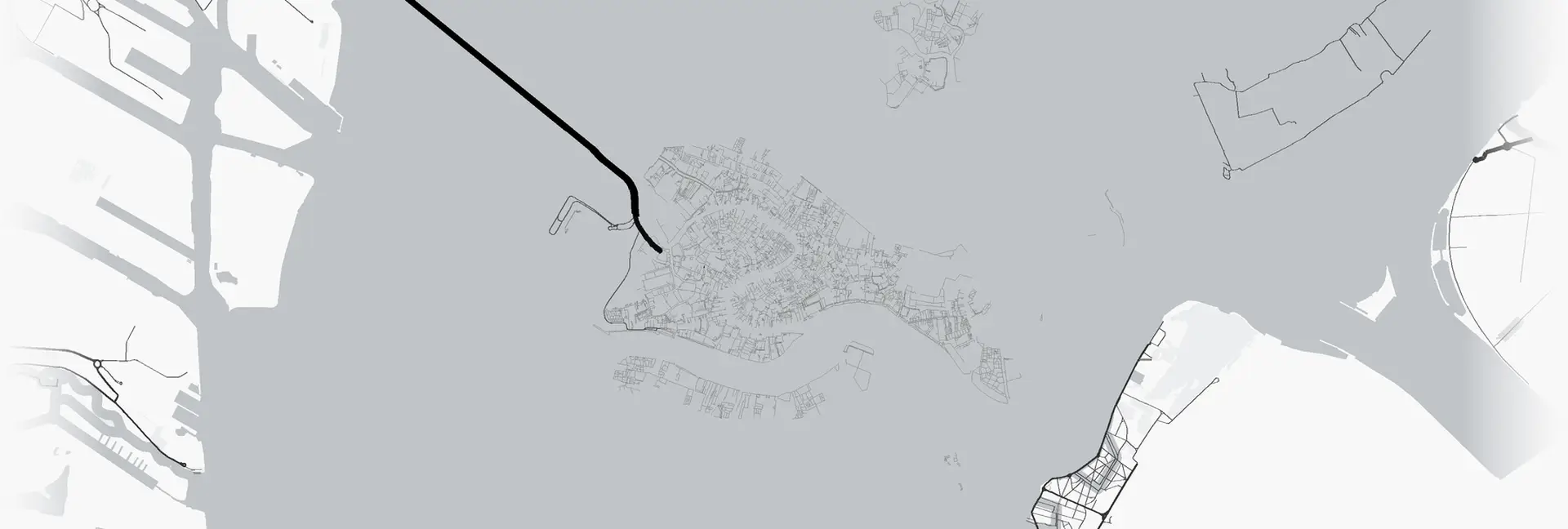
Venice
About this location
Venice offers one of the most magical train arrivals in the world: the railway tracks cross the lagoon causeway, depositing you directly onto the Grand Canal with no roads or cars in sight. Main departure and boarding stations for the Frecciarossa / ÖBB Nightjet include:
- Liège-Guillemins (13h 26m, 3 transfers)
- Brussels-South (Midi) (13h 38m, 2 transfers)
- Arnhem Central (14h 06m, 3 transfers)
- Eindhoven Central (14h 10m, 3 transfers)
Trenitalia and ÖBB tickets start from €69.00 when booked 3 to 6 months ahead. Last-minute peak fares reach €230.00, saving about 70% (€161). Overland bus options include Flixbus or multi-leg budget connections.
You step out of Venezia Santa Lucia right onto the steps of the Grand Canal. Board the ACTV Vaporetto (waterbus) water bus toward the Rialto Bridge and St Mark's Square. Venice is completely pedestrian, so Autovrij (fietsen verboden in historisch Venetië) (https://www.comune.venezia.it).
Cars cannot enter Venice. Driving takes around 13h 09m (~1107 km) to the edge of the lagoon. Expect around €140 in fuel (assuming 6.5 L/100 km, or ~€84 for EV charging (19 kWh/100 km)), plus around €75 in tolls (Austrian vignette plus Italian Autostrada A4/A27 toll) and parking (€35 per day in the city center (or ~€12 per day at a peripheral P+R)). For a weekend trip (round-trip fuel, any tolls, and 48 hours of central parking), total driving costs amount to ~€500 (~€388 for an electric car). In Mestre and Venice, historic Venice is completely car-free; parking is restricted to Tronchetto or Piazzale Roma. Charging stations on the mainland are on this map.
Transit & Connectivity
Overview of major transport hubs in Venice.
How far can you get by train
Drag to set maximum travel time. Click on a destination for the fastest route.